
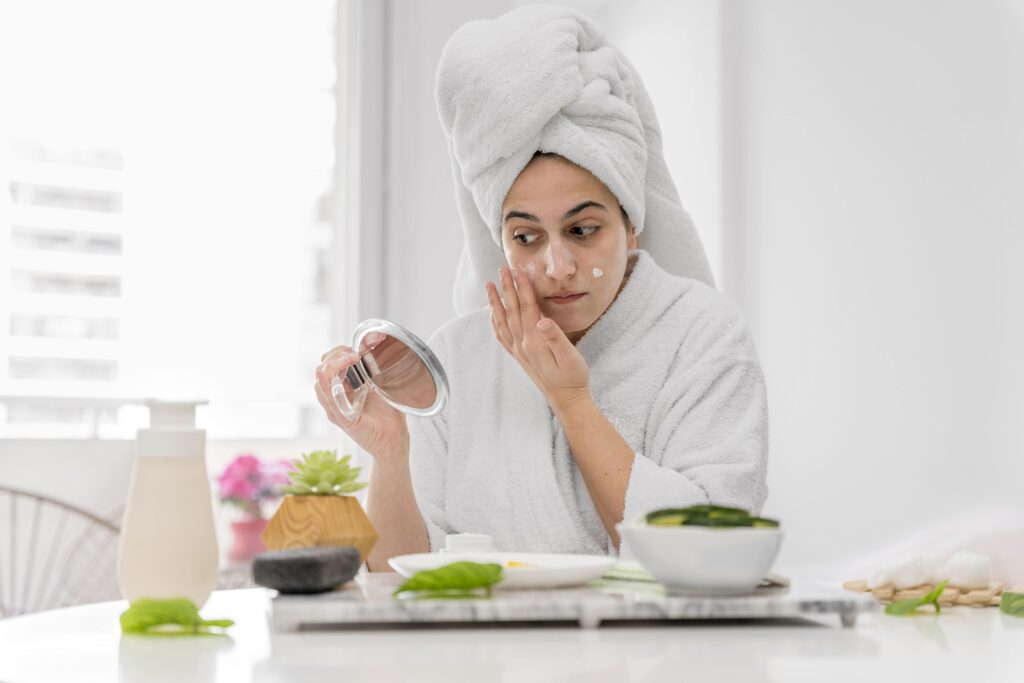
The beauty industry has adopted “clean skincare” as its leading industry trend. The beauty market displays products with “clean” and “natural” and “non-toxic” labels throughout its shelves and social media platforms. The beauty industry uses “clean skincare” as a term but consumers need to understand its actual meaning and its impact on skin health.
The staff at Corona Clinic supports patients through their process of selecting appropriate skincare products. The article explains what clean skincare represents while addressing common misconceptions about this term and its actual value for skin health.
What Is Clean Skincare?
The beauty industry uses “clean skincare” as an unregulated term which lacks official standards for definition. The beauty industry has adopted “clean skincare” as a movement which promotes products containing no controversial substances that could potentially harm users.
Most brands define clean skincare through three main criteria:
- The products contain no substances which trigger allergic reactions or cause long-term damage to the skin.
- The products use environmentally friendly packaging methods.
- The company reveals all ingredients on their labels to enable customers to select products wisely.
Common Ingredients Clean Skincare Avoids
The production of clean skincare products excludes these specific ingredients.
- The preservative parabens shows links to hormone disruption according to specific research studies.
- The foaming agents known as sulfates remove the protective barrier from the skin surface.
- Phthalates serve as fragrance components but scientific research shows potential health risks.
- Synthetic fragrance exists as a common substance which causes skin irritation to people with sensitive skin.
- Mineral oils function as occlusive agents which create pore blockages in specific skin types.
Clean skincare products deliver actual benefits to users based on their individual skin conditions.
The answer depends on your specific skin type and personal skin concerns.
- People with sensitive skin should choose fragrance-free gentle products since these work best for their skin type and clean skincare provides suitable options.
- People with acne-prone skin should stay away from ingredients that block pores because this helps control their acne outbreaks.
- People with normal or resilient skin types may not experience significant changes from clean skincare products but they will feel reassured by the products.
The term “clean” does not automatically guarantee better safety or effectiveness in skincare products. Traditional skincare ingredients that are synthetic have received extensive scientific validation and prove safe for typical users.
The selection of appropriate skincare products requires you to follow these steps.
- Check product labels instead of trusting marketing terms that appear on packaging.
- The three essential skincare ingredients for your skin are Vitamin C and hyaluronic acid and retinol.
- Before using any new skincare product perform a patch test to prevent skin irritation.
- Consult a professional for help determining which ingredients will work best for your specific skin type.
Our Corona Clinic experts create personalized skincare plans through scientific evaluation of your individual needs regardless of your preference for clean skincare products.
Final Thoughts
The practice of clean skincare involves selecting products with specific ingredients while it does not represent the sole method for achieving healthy skin. Your skin health requires products that combine safety with effectiveness and skin type compatibility.
The specialists at Corona Clinic will create a personalized skincare plan that suits your skin needs during your consultation appointment.
